Cooking Games: From Burgers to Bakeries

Cooking games are one of the oldest genres on the internet, and they keep coming back for a simple reason: they give you a small job you can do well. A customer wants a burger with no onions. You make a burger with no onions. They are happy, you get a tip, and the next customer walks in.
Under that simple loop there is a lot of variety. Some cooking games are frantic, some are slow and cozy, and some barely involve cooking at all. Here is how the main kinds work, how to get better at the fast ones, and which free cooking games you can play online right now.
The main types of cooking games
| Type | What you do | Pace |
|---|---|---|
| Restaurant (time management) | Take orders, cook and serve before customers lose patience | Fast |
| Burger and sandwich builders | Stack ingredients in the exact order on the ticket | Medium |
| Recipe games | Follow one recipe step by step: chop, mix, bake | Slow |
| Bakery and cake decorating | Bake, frost and decorate to match a picture | Slow |
| Kitchen chaos co-op | A team shares one kitchen and shouts a lot | Very fast |
| Food shop and diner management | Run the business: stock, prices, staff, upgrades | Varies |
Most cooking video games online are the first two kinds. They load fast, a round takes a few minutes, and they work well on a phone. The big console cooking games, the ones people look for on Switch, are mostly the co-op chaos kind, built for two to four players on one couch.
How restaurant games work
Almost every restaurant game runs on the same loop:
- A customer arrives and shows an order.
- You prepare the parts: cook the meat, cut the bread, pour the drink.
- You put the order together and serve it.
- The customer pays, and tips more for speed and accuracy.
- Between days, you spend the money on faster equipment or new recipes.
Each customer has a patience meter. The longer they wait, the smaller the tip, and if the meter runs out they leave. That is what "time management" means here: you are not judged on any single dish, you are judged on how well you juggle several at once.
Later levels add more of everything. More customers at once, longer orders, new ingredients and equipment that needs watching. The skill is keeping all of it moving without letting anything burn.
Tips that work in any time management cooking game
These come from the way real kitchens run, and they carry over to almost every restaurant game.
- Start the slowest step first. If the patty takes ten seconds on the grill and the bun takes one, the patty goes on the moment you read the order.
- Read the whole ticket before you touch anything. Many mistakes come from starting a burger and noticing the "no cheese" halfway through.
- Prep ahead in quiet moments. If the game lets you cook something before it is ordered, keep one ready during calm stretches. Real cooks call this mise en place, French for "everything in its place".
- Serve by patience, not by arrival. The customer about to walk out matters more than the one who just sat down.
- Upgrade the bottleneck. Notice what you wait on most. If you keep standing around while something cooks, buy faster cooking. Decorations can wait until the kitchen runs smoothly.
- Accuracy beats speed early on. In most games a wrong order costs more than a slow one. Speed comes by itself once the steps are in your hands.
- Replay a day you struggled with. Orders often follow a rhythm, and the second try is much easier once you know when the rush hits.
Order Up, Kitty!: our burger restaurant
Order Up, Kitty! is the cooking game on kekplay. A cat chef runs a burger joint, and the customers are a cast of cats, dogs and meme characters, each with a favorite order and a funny habit.
Every order works the same way. Read the ticket, grill the patty and flip it in the green zone, then build the burger layer by layer exactly as the ticket says. Ring the bell before the customer gets impatient. Each customer stamps the burger with a giant percentage, and perfect orders bring big tips.
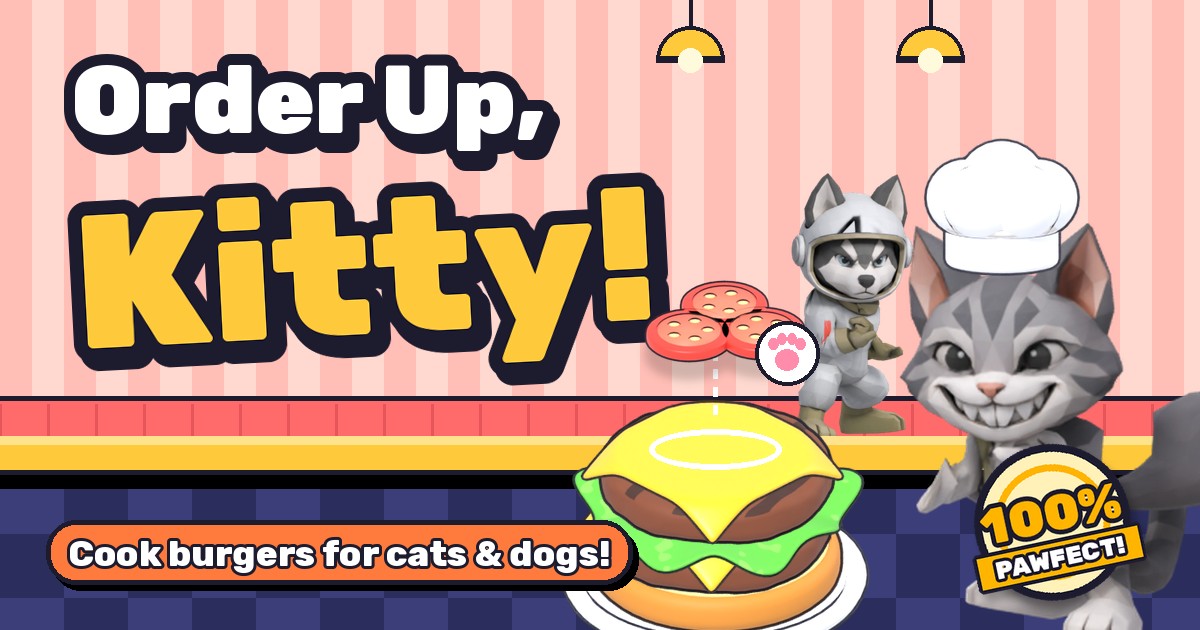
What sets it apart from most burger games is the stack. The layers really pile up on the bun, and a crooked burger wobbles and can topple. A few tips that help:
- Drop every layer in the middle of the bun. A small lean on the second layer becomes a big lean by the fifth.
- Flip the patty in the green zone every time. A badly cooked patty costs points no matter how neat the stack is.
- Spend early tips on the kitchen, then on the looks. Upgrades include a bigger grill, hot burners, a snap plate, comfy stools and a tip jar, and the chef hats and diner themes are there for when business is good.
There are 30 days with new ingredients and customers, then endless overtime days. A daily special gives everyone the same orders, so you can compare scores with friends. It is easy to learn and fine for kids, since the time pressure is light.
Bakery and cake games
Bakery games trade speed for precision. Instead of serving a queue, you usually get one picture of a finished cake and try to match it: the right sponge, the right frosting, the right decorations in the right places. Many of them score how close you got.
The tips here are different:
- Study the reference longer than feels necessary. Count the decorations and note where they sit before you start.
- Work from the bottom up. Base, then frosting, then details. Fixing a base after the sprinkles are on is never fun.
- Placement is where points go missing. Colors are easy to get right. Small details in the wrong spot cost more than you expect.
kekplay has no bakery game yet. If the decorating part is what you love, the closest thing we have is Sticker Nail Studio: customers bring a reference picture, you paint and decorate, and the game shows a match score. It uses the same skill as icing a cake to match a photo.
Food games that skip the kitchen
Some of the most fun food games have no stove at all.
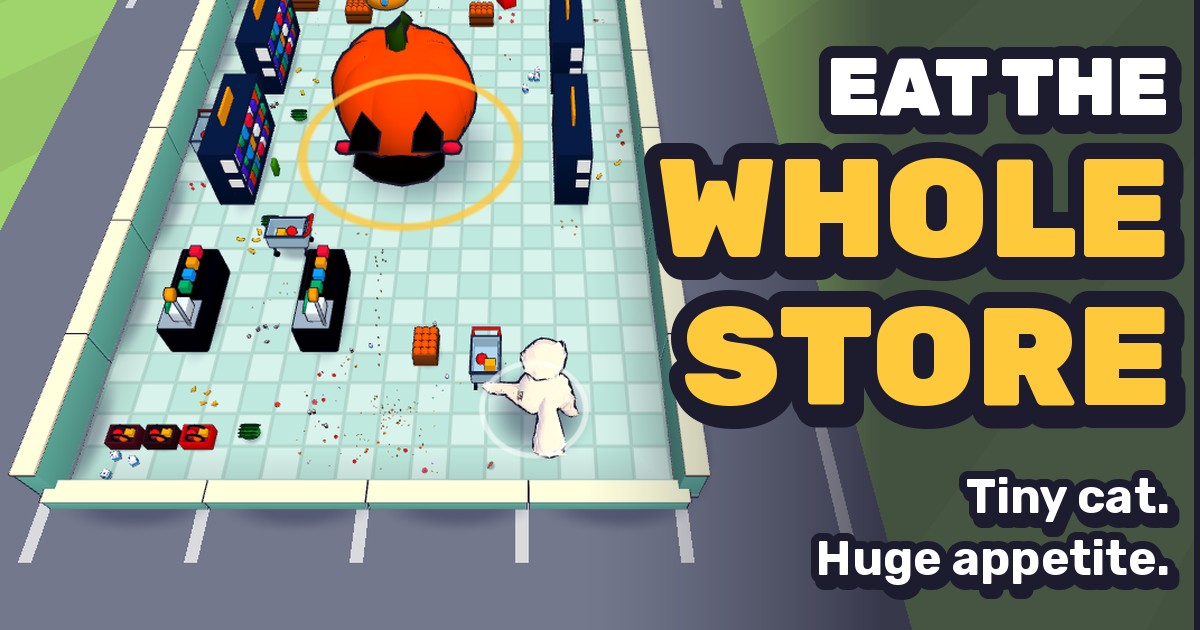
Eat the Whole Store. A tiny cat in a supermarket eats anything smaller than itself and grows with every bite. Levels end with giant boss items like a cake or a pizza, and one of the four places is a diner. Eat the food groups in the order of the Snack Song for a Chonk Rush.
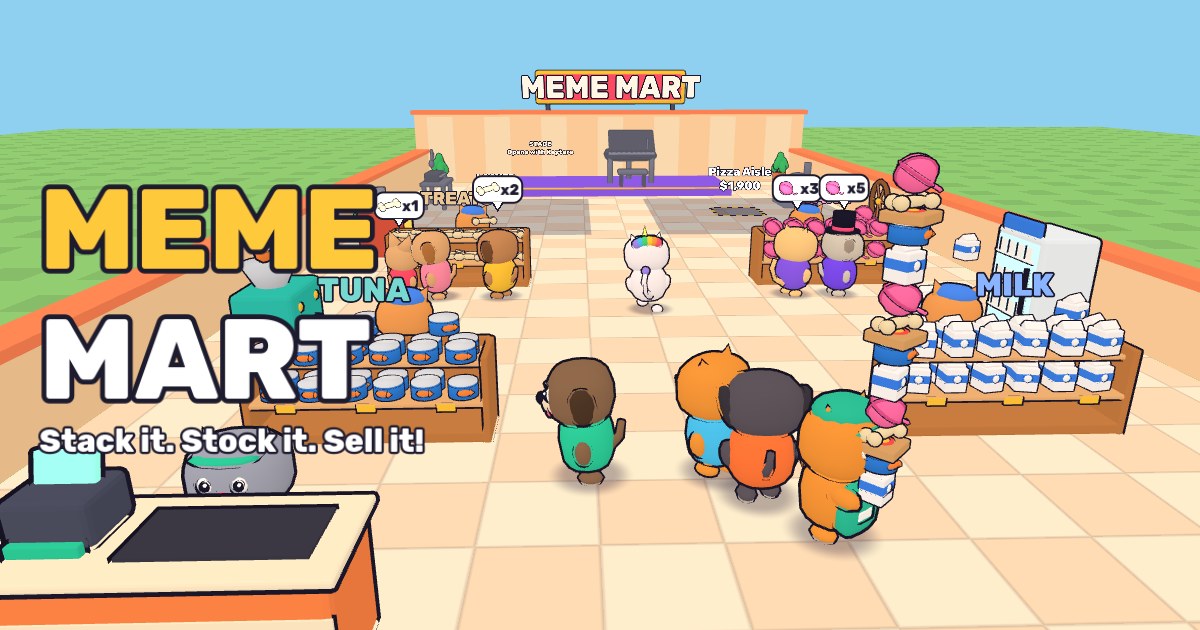
Meme Mart. A ginger shop cat runs a pet supermarket. Stack goods in your paws at the fridge, carry them to the shelves and ring up the queue at the till. The aisles go from milk and tuna to treats and pizza, and your carried tower of goods bends when you turn.
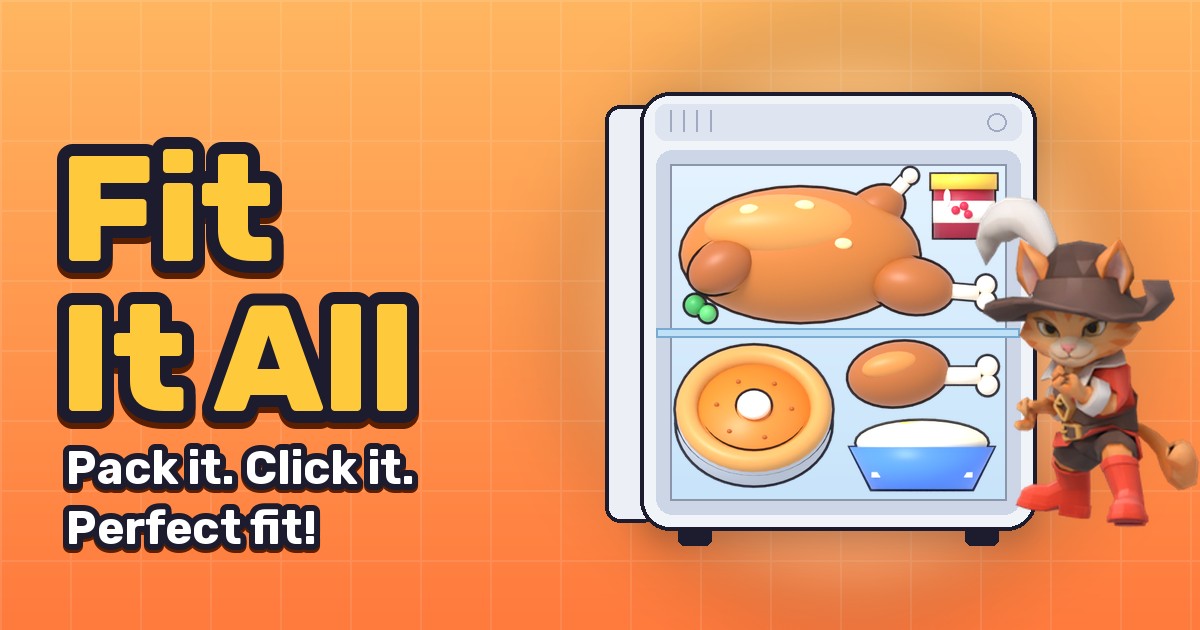
Fit It All. A packing puzzle with a whole pack of leftovers from the big November dinner. The roast turkey only fits in the fridge on its side, and there is a holiday Cookie Tin pack as well.
Shelf Sort Mart. Sort cupcakes, melons and boba cups on a capybara's shop shelves. Put three of the same in one cubby and they sell.
Do cooking games make you a better cook?
They will not teach you to season a sauce. They do drill a few habits that real cooks rely on: read the whole recipe first, start whatever takes longest, and keep your station tidy so you can find things in a rush. That last one sounds boring until you are looking for the cheese with three customers waiting. In a real kitchen, the same thinking is why the rice goes on before you start chopping vegetables.
More games with grills, kitchens and food are on our cooking games page.